Welcome, kings and queens!
If you still don’t know BuddhaChess, this is a site where we decided to bring a Buddhist view of aspects of life that can be well understood with examples of the game of chess.
Control the center
Although the chess player has numerous possibilities to make his first moves, some are more efficient than others. If you don’t observe the correct development of your pieces, you may have difficulties in attacking and problems in defending yourself, as well. A principle that is followed by both beginners and experienced players is controling the center of the chessboard. If you quickly gain control of the squares in the center of the board, you will have a better chance of winning.
Strategies
It is common to find players with different styles of play. There are those chess players who are quite offensive, who tend to quickly advance with the queen and soon seek to make checks or traps on the opponent. This can be dangerous, as leaving a valuable piece like the queen early in the game increases the risk of its capture.
On the other hand, there are those who value positional play and spend a good part of the game strengthening the king’s defense. This posture is more observed in more experienced players, but it is important to remember that the victory occurs for the player who applies checkmate.
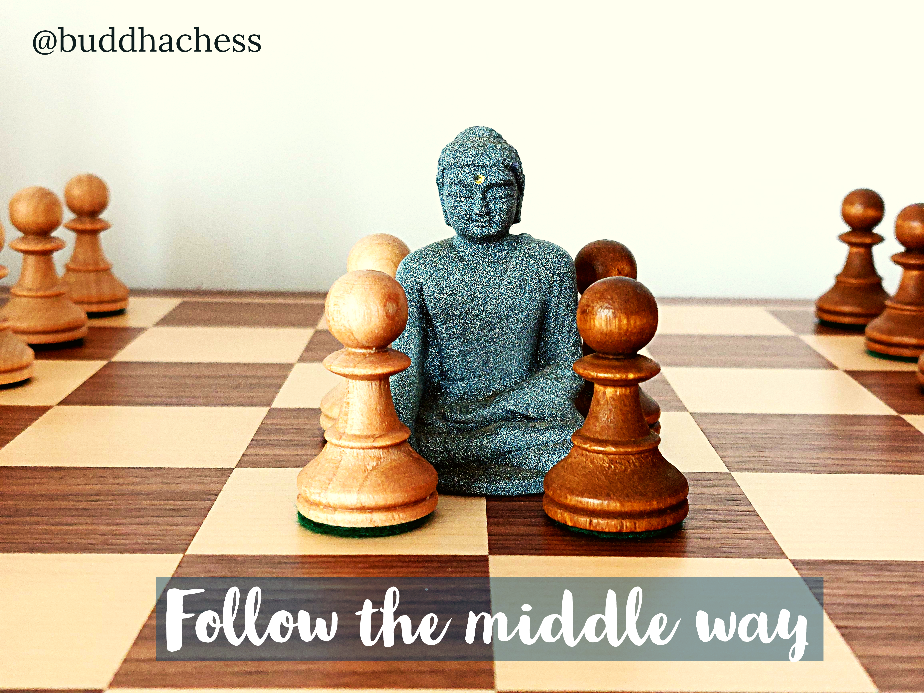
What is the best style of play? I believe it is important to escape extremes. Not having such an aggressive game, not too passive. It is what in Buddhism we call the Middle Way.
The Middle Way in Buddhism
Buddha Siddhārtha Gautama was a prince who lived in wealth and surrounded by material goods. He decided to abandon everything in pursuit of his spiritual development and better understanding of life. He went on to live only to meditate and fast, performing extreme religious practices. During this period he almost died for health issues.
After a few years he understood that virtue was in the middle way, that is, one should avoid extremes in life. From that moment he corrected his practice and attained enlightenment.
In teaching his disciples how to best follow this middle path in life, he structured them on the so-called Eightfold Path:
- Right understanding
- Right thought
- Right speech
- Right action
- Right livelihood
- Right effort
- Right mindfulness
- Right concentration

One who manages to follow the middle path will be closer to developing his buddhahood and being a winner in life. In chess or in life, take the middle way.
If you want to know more about Buddhism and Chess, download our BuddhaChess app, which brings daily encouragement quotes from chess masters and about Buddhism


