Complete Book of Chess Strategy: Grandmaster Techniques from A to Z
An easy-to-understand guide to chess strategy—conceptual planning—has always been the amateur’s dream. The Complete Book of Chess Strategy makes that dream a reality. This comprehensive guide in dictionary form, the first of its kind, makes all aspects of chess strategy quick, easy, and painlessly accessible to players of all degrees of strength. Each strategic concept is listed alphabetically and followed by a clear, easy-to-absorb explanation accompanied by examples of how this strategy is used in practice.
The Road to Chess Improvement
“How can I improve my game?” is a perennial question facing chess-players. Alex Yermolinsky is well-qualified to offer advice, having trained himself to ultimately achieve top-class grandmaster standard. In this award-winning book he passes on many of the insights he has gained over the years, steering the reader away from ‘quick-fix’ approaches and focusing on chess understanding and over-the-board decision-making.
Play Winning Chess
“When most people learn to play chess, they usually memorise the movements of the pieces and then spend years pummelling away at each other with little rhyme and even less reason. Though I will show you how each piece leaps around, what it likes to do on holidays, the real purpose of this book is to teach you to understand the four major principles of my Seirawan method: force, time, space and pawn structure. Each is easy to understand and each is a weapon that will enable you to defeat most anyone you challenge to a game”, Yasser Seirawan
An Explosive Chess Opening Repertoire for Black
“Rarely is an opening repertoire so thoughtfully put together … an ideal starting point for a Black player looking for a reliable but slightly ‘off the beaten track’ opening” – Alec Toll. This book equips the reader with everything he needs to know to play Black in a game of chess.
Chess For Dummies
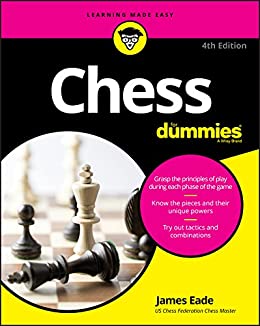
From Netflix’s “The Queen’s Gambit” to podcasts, virtual and mobile gaming, and beyond, chess is back in a big way. But, with all those kings, queens, and knights, chess can be a royal pain to grasp. Chess For Dummies is here to help beginners wrap their minds around the rules of the game, make sense of those puzzling pieces, and sharpen their chess strategy such that even Paul Morphy would be impressed. You’ll learn the laws of chess, its lingo, and engage in the art of the attack with the easy-to-follow, step-by-step explanations found in the latest edition of Chess For Dummies.
FCO: Fundamental Chess Openings
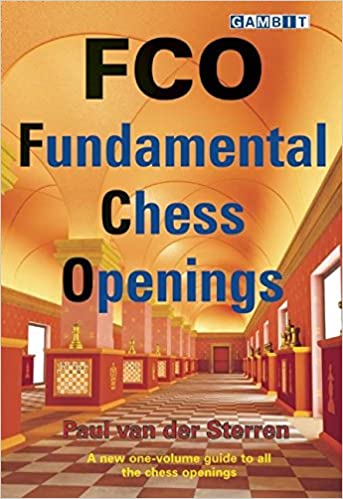
This is not a book that provides masses of variations to memorize. Paul van der Sterren instead offers a wealth of ideas and explanation, together with the basic variations of each and every opening. This knowledge will equip players to succeed in the opening up to good club level, and provide a superb grounding in opening play on which to build a more sophisticated repertoire. The strategies he explains will, unlike ever-changing chess opening theory, remain valid as long as chess is played, and so the time spent studying this book will be rewarded many times over.
Fundamental Chess Endings
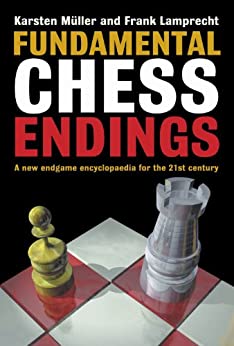
This is the first truly modern one-volume endgame encyclopaedia. It makes full use of endgame tablebases and analytical engines that access these tablebases; where previous authors could only make educated guesses, Müller and Lamprecht have often been able to state the definitive truth, or get much closer to it.
New time-controls involve competitive games being played to a finish in one session, so it is especially important that chess-players understand the key endgame principles. This book provides comprehensive assistance for any players wishing to study the endgame. In addition to a feast of detailed analysis, the authors emphasize the practical side of endgame play, describing rules of thumb, principles, and thinking methods.
Essential Chess Sacrifices
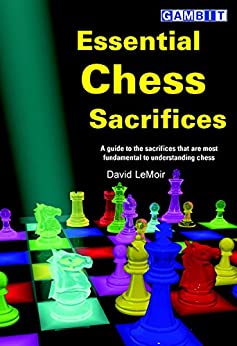
Sacrifices are an essential part of chess. Those who never consider sacrificing will miss countless opportunities and find that promising positions repeatedly slip away. Players who do not appreciate their opponents’ sacrificial possibilities will be unable to see danger signs, and find themselves on the wrong end of too many king-hunts. Rather than merely cataloguing the various possibilities and providing examples, LeMoir discusses the possible follow-ups to the sacrifices, the defensive options against them, and the positional factors that might suggest whether the sacrifice will be sound or unsound. There are many important types of chess positions that can only be played well by those who understand the thematic sacrifices that are possible.
CHESS: The Ultimate Chess Tactics and Strategies
Here’s what you’ll discover in this book:
How to move your king safely and stay in control of the game
Why losing means winning and how to lose wisely
How chess trading works and why you have to sacrifice your pawn to win a queen
The power of quiet moves
The danger of natural moves and learn how to fight your reflexes and play with strategy
Insider chess strategies used by famous chess players such as world chess champion Bobby Fischer
How to play open, semi-open, closed, semi-closed, and flank games even if you have never heard those terms before
How to give your game the final touch and kill your opponent’s king with secret strategies you’ve never heard before
And much more…
Mastering Chess Logic
What exactly makes the greatest players of all time, such as Magnus Carlsen, Bobby Fischer, and Garry Kasparov stand out from the rest? The basic aspects of chess (calculation, study of opening theory, and technical endgame ability) are of course of great importance. However, the more mysterious part of chess ability lies within the thought process.
In particular:
• How does one evaluate certain moves to be better than others?
• How does one improve their feel of the game?
This book will tackle this woefully underexplored aspect of chess: the logic behind the game. It will explain how chess works at a fundamental level.